In the order of the day: Sant Sadurní in the morning, Vilafranca in the afternoon, Torres as an option. Tick “Seen” as you go: the page remembers it on this phone.
- Address
- Carrer de Joan Sala, 2, Sant Sadurní d’Anoia, next to the station
- Practical
- Daily, by booking (visita@freixenet.com, +34 938 917 096). Combined visit €22.50, ages 9–17 €20, under 9 free
- Time on site
- ≈ 1 hr 30 for Freixenet, 1 hr 20 for the Cava Centre
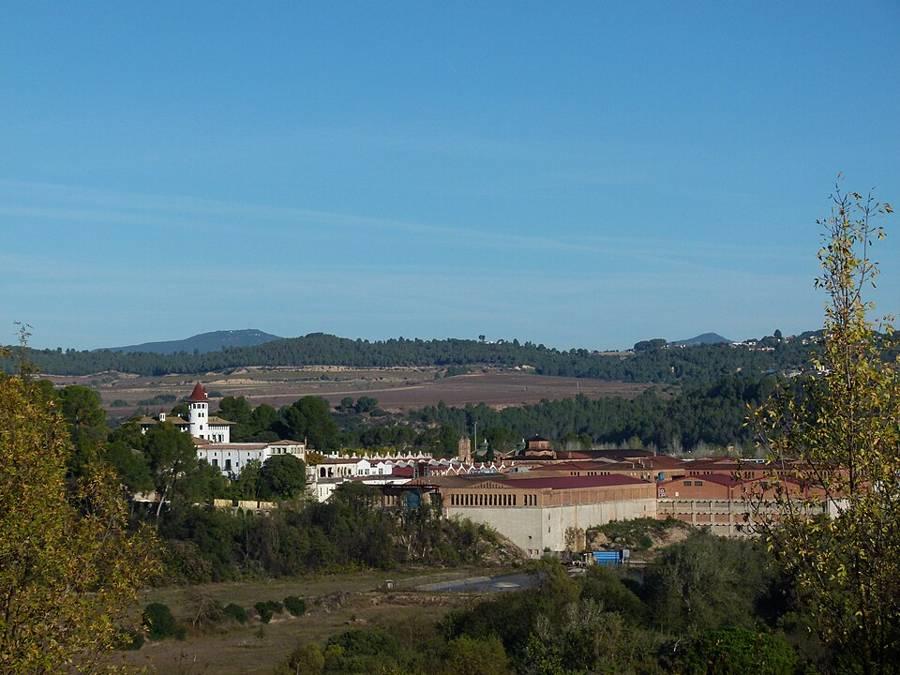
Sant Sadurní d’Anoia calls itself the capital of cava: the small town lives off the cellars dug beneath its streets. Freixenet, one of the largest sparkling-wine houses in the world, stands opposite the station, and its warehouses line the railway.
The combined visit adds the Cava Centre, in a former spirits distillery of 1814, which tells the story of cava on the scale of the town. The cellar tour ends with a tasting of two cavas.
What to look for
- The riddling racks, where bottles were turned by hand to bring the sediment down towards the neck.
- The underground galleries, at a constant temperature all year round.
The guide’s view
Book by email several days ahead and ask for a slot in English if there is one: languages depend on availability.
On foot through the centre of Sant Sadurní: ≈ 1.6 km, 27 min to Codorníu. Taxi available from the station.
- Address
- Avinguda de Jaume de Codorníu, Sant Sadurní d’Anoia
- Practical
- Codorníu Discovery Tour, daily by booking (codorniu.com, +34 938 913 342). €23, reduced €18.40, ages 8–17 €17.25. Tasting for over-18s only
- Time on site
- 1 hr 30
The Codorníu family has grown vines since the 16th century and claims to be the oldest family business in Spain. Its cellar buildings, designed by Josep Puig i Cadafalch, architect of the Casa Amatller, were declared a historic and artistic monument in 1976.
The tour crosses the Modernista halls, descends into the underground cellars and shows the old machinery. It ends with a little train through the galleries, then a tasting of two cavas.
What to look for
- Puig i Cadafalch’s brick arches and ceramics, rare in industrial architecture.
- The kilometres of galleries on several levels, where the bottles age lying down.
The guide’s view
Without a car, Codorníu is easier to visit than Freixenet if you enjoy walking; otherwise, take a taxi from the station. Do not combine both houses in one morning if you also want Vilafranca.
Back to Sant Sadurní station, then the R4 towards Sant Vicenç de Calders: ≈ 10–15 min to Vilafranca (check the timetable).
- Address
- From the station towards the centre
- Practical
- Public promenade
- Time on site
- 10 min
Leaving Vilafranca station, the Rambla leads to the old centre. The town is the capital of the Alt Penedès and has lived off wine since the Middle Ages: markets, fairs, merchants, then cooperatives and cellars.
The Modernista and eclectic façades of the Rambla and neighbouring streets recall the fortunes of the 19th century. Phylloxera then destroyed the vineyards, in the 1880s.
What to look for
- The façades of the merchants’ houses, with their balconies and ceramics.
The guide’s view
The bars on the Rambla are the right place for a vermut before lunch.
Straight on towards the old town: ≈ 400 m, 7 min to the basilica.
- Address
- Plaça de Jaume I
- Practical
- Parish church. Tours of the bell tower and roofs on some Saturdays at 11:00, with the tourist office; check dates
- Time on site
- 20 min
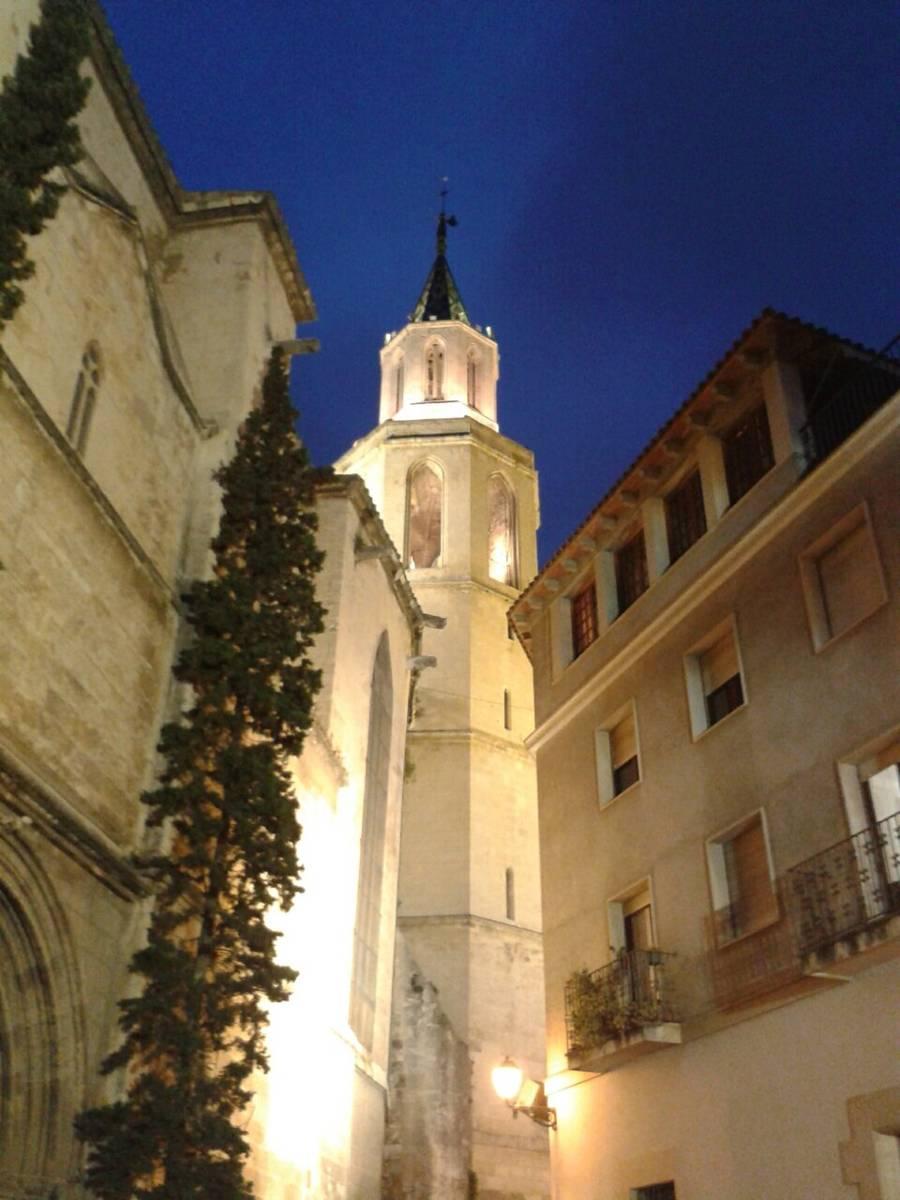
Vilafranca’s great Gothic church, raised to the rank of basilica, closes off Plaça de Jaume I. Its bell tower dominates the town and the plain of vines.
The church was set on fire in 1936, at the start of the Civil War, then restored. Excavations and recent works have revealed the history of its construction, which the bell-tower tours explain.
What to look for
- The bell tower, a Penedès landmark visible for miles.
- The gargoyles on the roofs, which the guided tour explains.
The guide’s view
Bell-tower and roof tours are booked through the tourist office (turismevilafranca.com); slots are scarce in winter.
On the same square: 50 m to the Vinseum.
- Address
- Plaça de Jaume I, 1
- Practical
- Tue–Sat 10:00–19:00, Sun and public holidays 10:00–14:00. Closed Monday. Free on the first Sunday of the month. Check admission price
- Time on site
- 1 hr 15
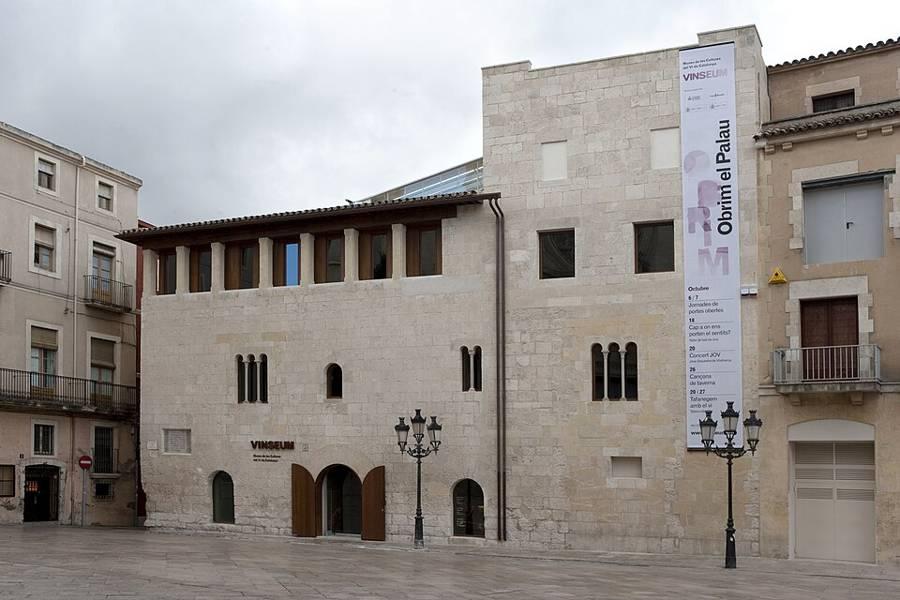
The museum occupies the former palace of the Kings of Aragon, in the heart of the town. It tells the story of wine in Catalonia from Antiquity to the present: vineyard tools, presses, trade, festivals. It also shows the invention of cava in the Penedès, in the late 19th century.
Until 14 February 2027, the chapel of Sant Pelegrí hosts the free exhibition “Vilafranca 1926: the embryo of modernity?”.
What to look for
- The great wooden screw presses.
- The collection of wine-related art, from ceramics to painting.
The guide’s view
A guided tour is included in admission on the first and third Saturdays of the month at 12:00. The Vinseum also runs paid tastings: see the programme.
Via Carrer de Sant Joan: ≈ 150 m, 3 min to Cal Figarot.
- Address
- Carrer del General Prim
- Practical
- Headquarters of the Castellers de Vilafranca; rehearsals on some weekday evenings, check with the colla
- Time on site
- 10 min
Vilafranca is one of the capitals of the castells, the Catalan human towers inscribed on UNESCO’s intangible heritage list in 2010. The green-shirted Castellers de Vilafranca are among the strongest colles in Catalonia.
Cal Figarot is their headquarters. The great diades take place on Plaça de la Vila. They are held during the Festa Major, in late August and early September, and on All Saints’ Day, 1 November.
What to look for
- The photographs and trophies of the tallest towers, visible from the entrance when the building is open.
The guide’s view
Watch a rehearsal in silence, from the edge of the hall. Ask before photographing the children who climb to the top.
Via Carrer de la Cort: ≈ 200 m, 3 min to Plaça de la Vila.
- Address
- Plaça de la Vila, old centre
- Practical
- Saturday market: food 8:00–14:00, other stalls 9:00–14:00, over 200 stalls across nine streets and squares
- Time on site
- 30 min, 1 hr on Saturdays
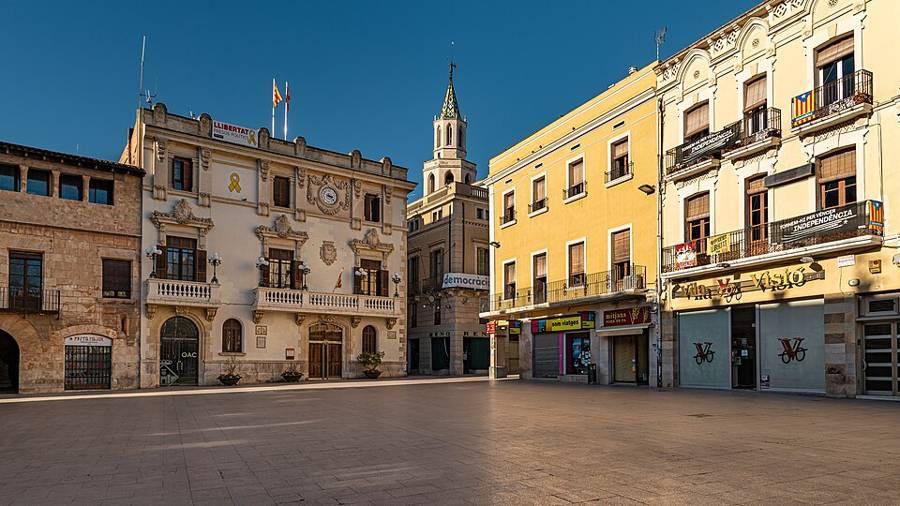
The town-hall square is the stage for the castells and the centre of the big Saturday market, one of the most important in Catalonia. It fills the whole centre, from Plaça de Jaume I to Rambla de Sant Francesc.
Here you buy Penedès produce: charcuterie, cheeses, fruit, wines from small cellars, and in December the capons of the Fira del Gall.
What to look for
- The town hall and its arcades, in front of which the castells are raised.
- The stalls of wine and cava producers, at cellar-door prices.
The guide’s view
Come before 11:00: by midday, the crowds make it hard to move and the best produce has gone.
End of the walking loop. Back to the station: ≈ 500 m, 9 min. For Família Torres, car or taxi: ≈ 3 km, 10 min.
- Address
- Finca el Maset, Pacs del Penedès
- Practical
- Weekend visits by booking (torres.es, reserves@torres.es, +34 938 177 330): 4 wines and 4 tapas €37, or 4 wines and 4 cheeses €34
- Time on site
- ≈ 2 hr
Torres is the other great name of the Penedès, this time for still wines. The family house, founded in Vilafranca in the 19th century, has become one of the best-known Spanish wine groups abroad.
The visitor centre, among the vineyards north of Vilafranca, shows the cellar and the vineyard, then offers food and wine pairings.
What to look for
- The vineyard around the cellar, and Montserrat on the horizon in clear weather.
The guide’s view
Without a car, book a taxi from Vilafranca. If you drive, choose a driver who does not taste: checks are frequent on the vineyard roads.