

History and heritage · Place · checked on 05/11/2026
La Ribera · Barcelona

The Museu Picasso, a painter’s apprenticeship

The first museum devoted to Picasso in his lifetime does not show the famous painter: it shows how he became one. From his childhood drawings to the 58 works of the Las Meninas series, in five Gothic palaces in La Ribera.

  • 11stops
  • 1 hr 30 to 2 hrvisit

This guide follows the chronological order of the collection, then suggests two stops outside, on Picasso’s trail in the old town. Out of respect for copyright, no work is reproduced here: the photos show the palaces.

Age 13

1895

Arrives in Barcelona. Enters the Llotja school, where his father teaches.

Age 15

1897

Science and Charity, honourable mention at the National Exhibition in Madrid.

Age 19

1900

First exhibition, at the Els Quatre Gats tavern. First trip to Paris.

Age 22

1903

Blue Period in Barcelona, before settling for good in Paris in 1904.

Age 35

1917

Back in Barcelona with the Ballets Russes. The Harlequin.

Age 76

1957

Las Meninas in Cannes: 58 works, given to the museum in 1968.

Status as of 05/11/2026

“Picasso and Architecture” opens on 20 November 2026, until 7 March 2027. On 5 November, no other temporary exhibition had been announced: until the 20th, only the collection is on view.

Winter hours until 29 March 2027: Tuesday to Sunday, 10:00–19:00. Closed on Mondays, 25 December and 1 January; 10:00–14:00 on 24 and 31 December.

Collection and exhibition at the ticket desk, €14 online. Reduced €7.50. Free for under-18s.
€15
Free entry in winter, on booking, as on the first Sunday of the month.
Thursday 16:00–19:00
The museum opens, under Franco, around the collection of Jaume Sabartés.
1963
Works in the collection, mostly from his youth.
≈ 4,200

The approach

A museum of formation, not of Cubist masterpieces.

The collection’s strength is Picasso’s youth, from childhood to the Blue Period. Nowhere else offers such continuity. Les Demoiselles d’Avignon is in New York, Guernica in Madrid. Coming here for Cubism would be a disappointment.

A museum born under Franco, around a friend.

The museum opened in 1963, on the initiative of Jaume Sabartés, Picasso’s boyhood friend and secretary. Picasso, in exile and opposed to the regime, never returned to Spain. The museum was first presented as the Sabartés collection, so as not to display the artist’s name.

Three gifts that make the collection.

In 1968, Las Meninas, on Sabartés’s death. In 1970, some 900 early works kept by the family in Barcelona. In 1982, the ceramics given by Jacqueline Roque. The city holds about 4,200 works.

Five medieval palaces for a modern painter.

The collection spreads across five Gothic mansions on Carrer de Montcada. The courtyards and staircases are part of the visit, and the route moves from one building to the next without your always noticing.

The route

The hang changes regularly and rooms close for exhibitions: locations are given by period, not by room number.

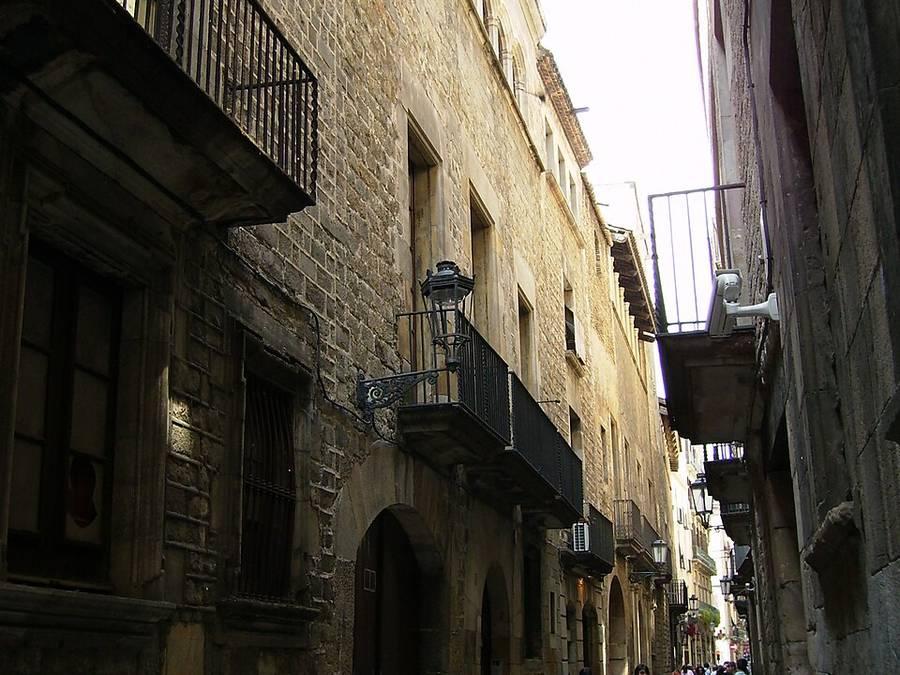
Carrer de Montcada, a narrow medieval street in La Ribera
Carrer de Montcada, the street of merchants’ palaces.Photo: Puigalder · CC BY-SA 3.0 · Wikimedia Commons
01
Must-seeOutdoorsFree

Carrer de Montcada

Where
From Plaça de Santa Maria to Carrer de la Princesa
Time
10 min

The street of merchants enriched by Mediterranean trade, in the 13th–15th centuries. Their palaces present sober façades to the street and hide inner courtyards with open staircases, the model of the Barcelona Gothic palace.

The museum occupies five of these adjoining mansions: the Aguilar, Baró de Castellet and Meca palaces, the Casa Mauri and the Finestres palace. So you also visit a medieval street from the inside.

What to look for

  • The round-arched doorways, wide enough for carts.
  • The queue: it tells you what time not to come.

The guide’s view

Arrive via the basilica of Santa Maria del Mar, at the bottom of the street. The guide’s “El Born on foot” page tells the story of the merchants’ quarter.
OpenStreetMapGoogle Maps41.38520, 2.18080
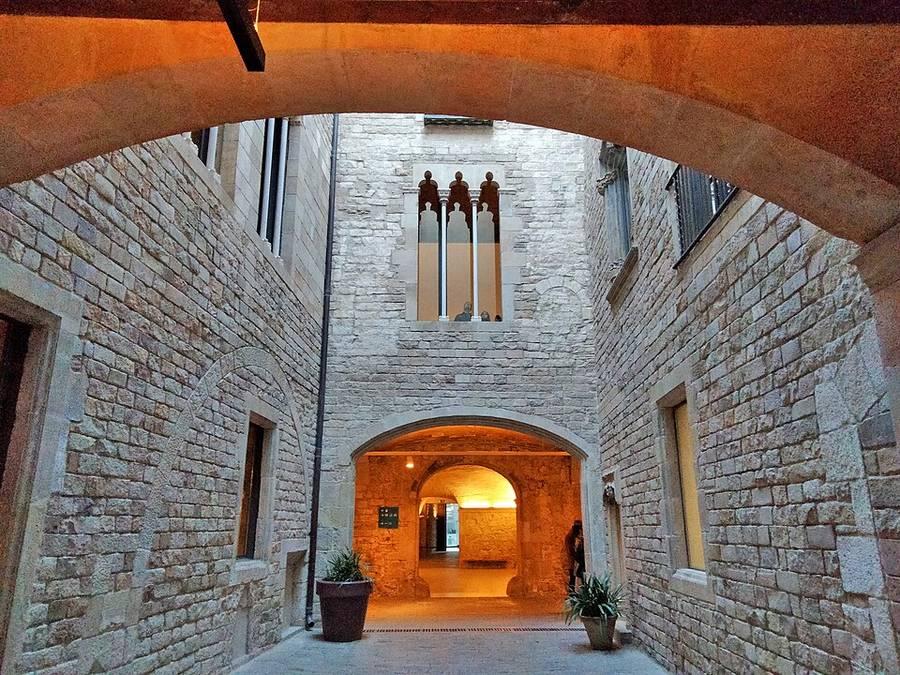
Courtyard of the Baró de Castellet palace, at the Museu Picasso
The neighbouring courtyard, that of the Baró de Castellet palace.Photo: Enric · CC BY-SA 4.0 · Wikimedia Commons
02
Must-seeBuilding

The courtyard of the Aguilar palace

Where
Entrance, Carrer de Montcada 15
Time
5 min

The museum opened in 1963 in this single palace. Its Gothic courtyard, with the outdoor staircase rising to the main floor and the gallery of slender arches, is the building’s calling card.

During the works, 13th-century wall paintings telling the conquest of Majorca were found in the palace. They were removed and are now in the Museu Nacional d’Art de Catalunya, on Montjuïc.

What to look for

  • The open staircase, resting on a rampant arch.
  • The main-floor gallery and its slender columns.

The guide’s view

Photograph the courtyard before entering the galleries: inside, photography may be restricted in some areas.

03
Must-seeCollection

Málaga and A Coruña, the child who copies

Where
First rooms
Time
10 min

Pablo Ruiz Picasso was born in Málaga in 1881. His father, José Ruiz Blasco, was a painter and drawing teacher. The family moved to A Coruña in 1891, then to Barcelona in 1895.

The first rooms show notebooks, caricatures and academic drawings after antique plaster casts. What makes them remarkable is the age of their author: ten, eleven, twelve.

What to look for

  • The drawings from casts, already assured in technique.
  • The little illustrated newspapers made for the family.

The guide’s view

Look at the dates on the labels more than at the works: the collection reads like a story of growth.

04
Must-seeCollection

Barcelona, 1895–1897: the Llotja student

Where
Rooms at the start of the collection
Time
15 min

At 13, Picasso entered the Llotja school of fine arts, where his father taught. He painted his first large academic pictures, designed for the official exhibitions.

First Communion (1896) and Science and Charity (1897) are the two central pieces. The second, a sickbed scene with a doctor and a nun, won an honourable mention at the National Exhibition in Madrid. Picasso was 15.

What to look for

  • Science and Charity: the doctor’s hand, the nun, the rumpled bed.
  • First Communion: the handling of the white fabrics.

The guide’s view

Linger in front of Science and Charity: this is the picture that shows Picasso mastered the classical craft before taking it apart.

05
Must-seeCollection

Els Quatre Gats and the Blue Period

Where
Rooms 1899–1904
Time
15 min

Back in Barcelona in 1899, Picasso frequented the Els Quatre Gats tavern, haunt of the Modernistes, where he first exhibited in 1900. He drew his friends, including Jaume Sabartés, later his secretary and the museum’s founder.

Then he left for Paris, came back, left again. Between 1901 and 1904, the death of his friend Carles Casagemas and the city’s poverty coloured his painting. This is the Blue Period, and the museum holds several canvases from it painted in Barcelona.

What to look for

  • The portraits of the Quatre Gats circle.
  • The rooftops of Barcelona and the figures of the Blue Period.

The guide’s view

Note the views of the city’s rooftops: you can compare them with what you will see from the cathedral roof terraces.

In this guide : Barri Gòtic on foot →

06
UnusualCollection

1917, the return with the Ballets Russes

Where
Rooms of the mature years
Time
10 min

Picasso returned to Barcelona in 1917, with Diaghilev’s Ballets Russes and the dancer Olga Khokhlova, whom he married the following year.

Among other works he painted The Harlequin here, which the artist later gave to the city. After Cubism, he returned to a clear, almost classical figure: he never entirely abandoned one language for another.

What to look for

  • The Harlequin: the pose, the costume, the gaze towards the viewer.

The guide’s view

It is one of the few mature works in Barcelona: do not miss it between the early rooms and Las Meninas.

07
Must-seeCollection

Las Meninas, 58 works around Velázquez

Where
Main room of the series
Time
20 min

In 1957, in Cannes, Picasso spent several months taking apart Velázquez’s Las Meninas. The whole scene, then the infanta, the ladies-in-waiting, the dog, the light from the far door. The series numbers 58 works: the variations on the painting, and a few canvases painted at the same time. These are views of pigeons at his window and landscapes.

In 1968, on the death of Jaume Sabartés, Picasso gave the complete series to the museum in his memory. It is the only place where it can be seen in full.

What to look for

  • The large canvas of the whole scene, then the variations that isolate a single figure.
  • The pigeon canvases, painted at the same time, like a pause for breath.

The guide’s view

If you know the original in the Prado, play the game: find each figure from one canvas to the next.

08
UnusualCollection

The ceramics and Jacqueline’s gift

Where
Last rooms
Time
10 min

After the war, Picasso worked in ceramics at Vallauris: dishes, plates and jugs, painted and shaped. His widow, Jacqueline Roque, gave the museum a group of his ceramics in 1982.

These rooms show Picasso as craftsman and player, far from the great canvases.

What to look for

  • The faces and animals painted on the dishes.
  • The jug shapes turned into bodies.

The guide’s view

If you are short of time, this is the room to cross quickly; if you love craft, it is the most surprising.

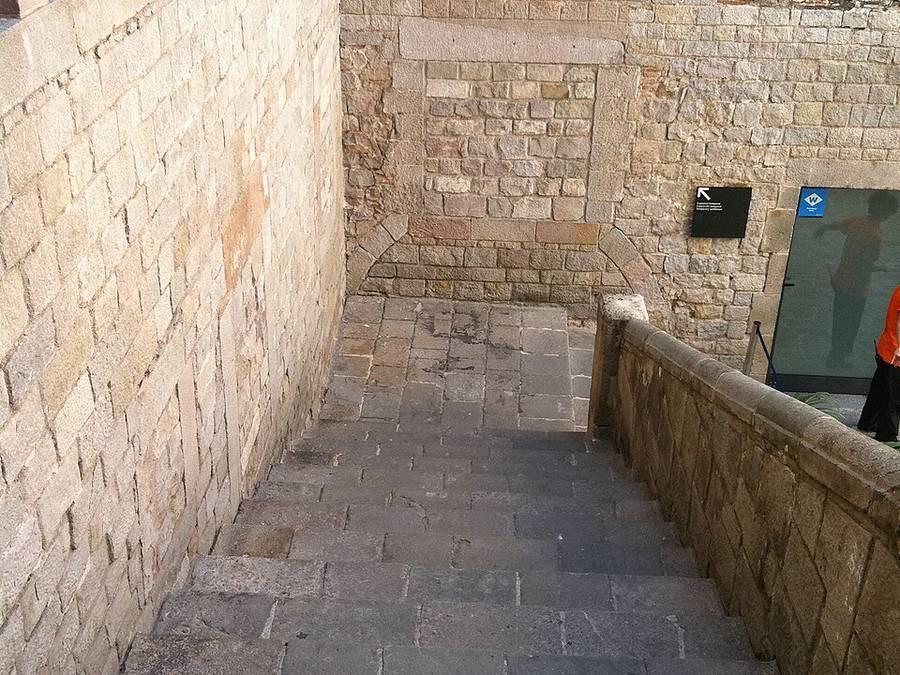
Stone staircase in the courtyard of the Finestres palace
The courtyard of the Finestres palace, at the far end of the museum.Photo: Kippelboy · CC BY-SA 3.0 · Wikimedia Commons
09
UnusualTemporary exhibition

Picasso and Architecture

Where
Temporary exhibition rooms
Dates
From 20 November 2026 to 7 March 2027

The exhibition explores Picasso’s relationship with architecture and space: his vision of the city, his interiors. It also shows the sculptures he called space cages, his dialogue with Le Corbusier, the synthesis of the arts.

It is part of the programme for Barcelona, World Capital of Architecture 2026. Curators: Enrique Granell, Emmanuel Guigon and Maisa Navarro.

What to look for

  • The links with the frieze Picasso drew for the Col·legi d’Arquitectes, five minutes away on foot (stop 11).

The guide’s view

Opens on 20 November. Before that date, the collection and exhibition ticket admits you to the collection only: check the price when you buy.

10
UnusualOutdoors

Els Quatre Gats

Where
Carrer de Montsió, 3 bis
Time
5 min

The tavern opened in 1897 on the ground floor of the Casa Martí, a neo-Gothic building by Josep Puig i Cadafalch. It was the meeting place of Modernista painters and writers, around Ramon Casas and Pere Romeu.

Picasso first exhibited here in 1900 and designed its menu. Today’s establishment is a restaurant that has taken over the name and the decor.

What to look for

  • Puig i Cadafalch’s neo-Gothic façade and its sculpture.
  • The room with its great beams, seen from the entrance.

The guide’s view

The guide does not recommend the restaurant, not having vetted it: look at the façade and the room from the door.

OpenStreetMapGoogle Maps41.38580, 2.17390
11
UnusualOutdoorsFree

The frieze of the Col·legi d’Arquitectes

Where
Plaça Nova, opposite the cathedral
Time
5 min

On the façade of the Architects’ Association of Catalonia, a frieze etched into the concrete shows scenes of popular festivity. Children, a sardana, giants. Picasso drew it, and the Norwegian artist Carl Nesjar executed it by sandblasting, in the early 1960s.

It is the only work by Picasso on view in the open air in Barcelona, and it costs nothing.

What to look for

  • The giants and the sardana, on the frieze facing the square.
  • The other friezes, inside and on the side façade.

The guide’s view

Fit this stop in before or after the cathedral: the frieze is right opposite the Pla de la Seu.

OpenStreetMapGoogle Maps41.38460, 2.17520
Paid ticket · €14 online

Pay or book free entry?

Choose your time

Time slot chosen in advance, with no limit on how long you stay until closing. You can come at opening time, when the rooms are quiet.

For whom: those with few days in Barcelona who want to take their time in front of Las Meninas.

Thursday afternoon or first Sunday

Free entry · on booking

Booking compulsory, opening four days ahead at 10:00, and places go fast. Only three hours on Thursdays, and crowded rooms.

For whom: long, flexible stays, and those who book the moment the slots open.

Tickets and opening hours

2026 prices

TicketPriceNote
Collection and exhibition, online€14With time slot
Collection and exhibition, at the ticket desk€15Subject to availability
Reduced€7.50Ages 18–25, students, over-65s, with proof
Free€0Under-18s and other groups listed by the museum, with proof
Articket BCN€38Six art museums, valid 12 months

Opening hours

PeriodDaysHours
29 Sept–29 MarTuesday–Sunday10:00–19:00
31 Mar–27 SeptTuesday, Wednesday, Sunday9:00–20:00
31 Mar–27 SeptThursday–Saturday9:00–21:00
Before you go